Key Takeaways
- •Organic reach has collapsed ~64% from its peak. Company pages reach just 1.6% of followers.
- •Boosting fails because it targets random users for random impressions — not your named accounts.
- •Sequenced LinkedIn Ads guarantee delivery to your target accounts: the right people, seeing you repeatedly, in an order that builds recognition.
- •Recognition = Reach × Frequency × Sequence. Stop playing the algorithm lottery.
It's not in your head. The data confirms it: 2025 officially marked the "Organic Reach Crisis."
According to Q3 2025 benchmarks, organic reach is down ~64% from its peak just two years ago. Median post impressions have dropped 18% year-over-year, and for company pages, the news is even worse: they now make up just 1-2% of the total LinkedIn feed.
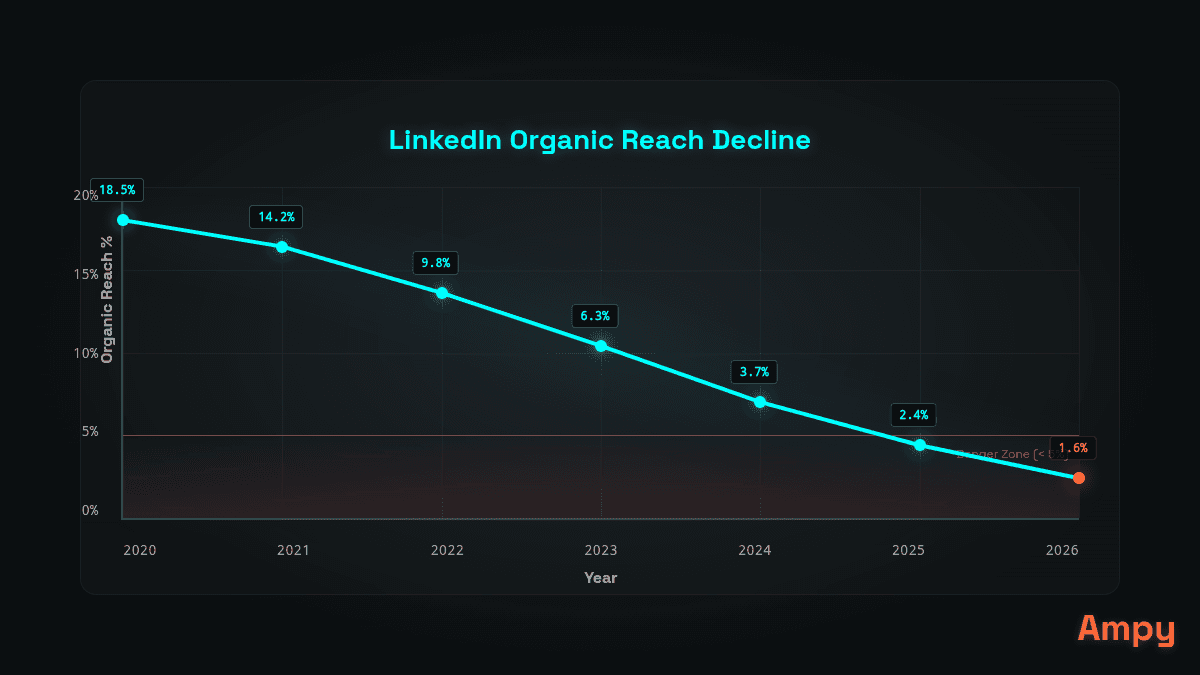
The era of "build an audience and they will come" is over.
The feed is crowded. The algorithm is picky. And worst of all: your actual prospects—the high-value accounts you need to reach—are almost certainly missing your content.
Why Boosting Fails
Most teams react to low reach by hitting the "Boost" button. It feels like the solution. You pay money, you get impressions.
But boosting is a lottery.
The Boosting Trap:
- Random Reach: LinkedIn shows your boosted post to whoever is easiest to reach, not who is most valuable.
- Vanity Metrics: You get "likes" from random accounts, but zero pipeline impact.
- No Account Control: You cannot boost a post only to Salesforce, Oracle, and Adobe. It's too broad.
The Solution: Sequenced LinkedIn Ads
Stop playing the algorithm lottery. Start guaranteeing delivery.
Sequenced LinkedIn Ads flip the script. Instead of posting and hoping, you define exactly who sees your content before you even publish.
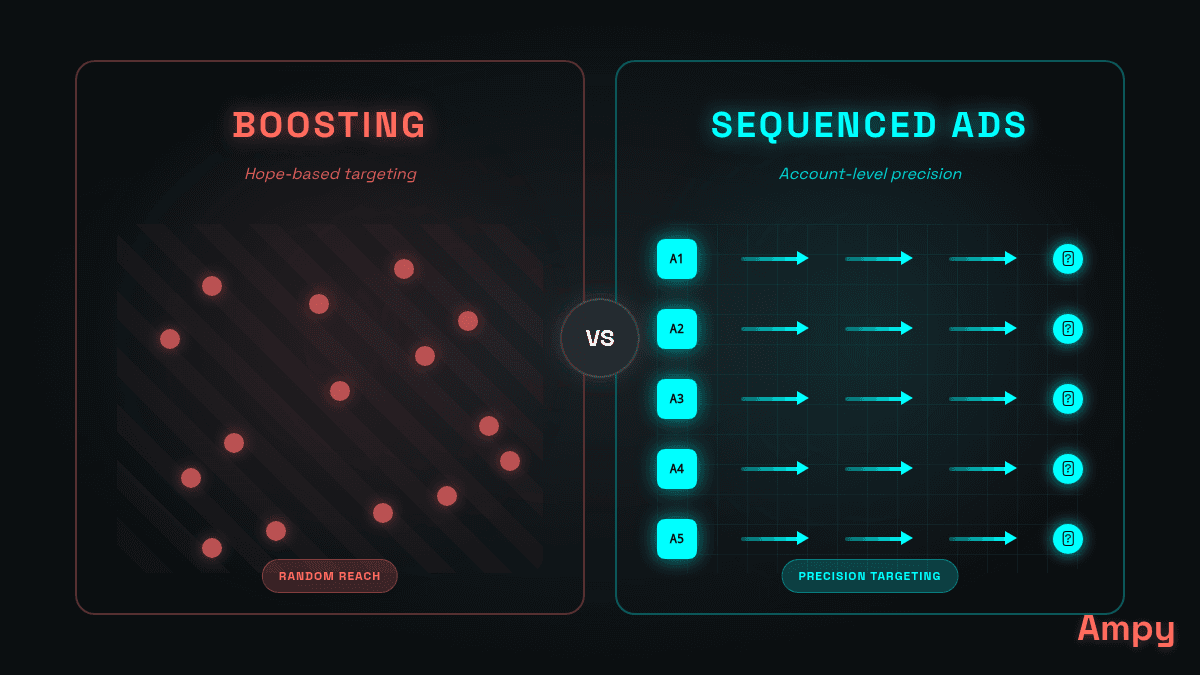
The Old Way
Organic / Boosting
Post → Hope Algorithm Picks It Up → Random People See It → 5% Reach
The Ampy Way
Sequenced LinkedIn Ads
Detect Post → Match to Target Account List → Guaranteed Delivery → 60-70% Account Penetration
How to Execute It
You implement this using Thought Leader Ads (TLAs), but not as "ads" in the traditional sense. You use them as a guaranteed delivery mechanism.
1. Define Your List
Upload your top 500 target accounts to LinkedIn.
2. Detect High-Value Content
When your CEO writes a great post about industry trends, don't let it die in the feed.
3. Force Distribution
Promote that post only to your 500 target accounts. Not to get leads immediately, but to ensure they see it.
You are essentially buying "guaranteed organic reach" for the people who matter most.
Why Frequency Matters
Delivery isn't enough. You need saturation. This is where the magic of Frequency-Based Sequencing comes in.
We don't just show an ad once. We systematically saturate the account to ensure your message lands, then move to a maintenance mode to stay top-of-mind without burning budget.
Day 1 (Saturation Mode)
We launch with a 30 impressions per 7 days frequency cap. This aggressive setting ensures we break through the noise and get in front of the key buyers at your target accounts immediately.
Day 7 (Maintenance Mode)
Once we've achieved initial penetration, we dial it back to 3 impressions per 7 days. This keeps your brand present and "always-on" without overwhelming the user or wasting spend.
This sequencing creates accounts that recognize your exec before sales ever reaches out.
Data Sources & Citations
This analysis relies on verified 2023-2025 benchmark reports:
- Socialinsider 2025 Benchmark Report: Documented the ~64% drop in organic reach and 18% YoY median impression decline.
- AuthoredUp Algorithm Report (2025): Confirmed reach is down for 98% of users, with text posts seeing a 28.4% median drop.
- Ordinal & OneToThree Analyses: Highlighted that company pages now account for just 1-2% of feed impressions.
Frequently Asked Questions
How bad is the LinkedIn organic reach decline?
According to 2025 benchmarks, organic reach has dropped ~64% from its peak. Company pages now account for just 1-2% of the total LinkedIn feed, with median post impressions down 18% year-over-year. The era of "build an audience and they will come" is over.
Why doesn't boosting solve the reach problem?
Boosting is a lottery — LinkedIn shows your content to whoever is easiest to reach, not who is most valuable. You get random impressions from random accounts, but zero control over which specific companies see your content. It generates vanity metrics, not pipeline.
How do Sequenced LinkedIn Ads work differently?
Instead of posting and hoping, you define exactly who sees your content before you publish. Sequenced LinkedIn Ads use Thought Leader Ads to guarantee delivery to your target account list. You achieve 60-70% account penetration instead of 5% organic reach.
What is the frequency squeeze strategy?
Start with 30 impressions per 7 days to break through the noise and achieve initial penetration. After Day 7, dial back to 3 impressions per 7 days for maintenance mode. This creates accounts that recognize your executive before sales ever reaches out.
Is this approach sustainable long-term?
Yes. You're essentially buying guaranteed organic reach for the people who matter most. The cost is minimal compared to the value of ensuring your target accounts see your executive's expertise. It's not about gaming the algorithm — it's about bypassing it entirely.
Stop hoping the algorithm finds your buyers
Ampy delivers your exec's content to the accounts that matter — in sequence, on purpose.
Get early access to Mission Control
One email. We'll reach out when your seat is ready.
One email. No spam. Just early access.
Related Articles
Thought Leader Ads — The Complete LinkedIn Guide (2026)
The definitive guide to thought leader ads (TLAs) on LinkedIn. Learn setup, costs, best practices, and why sequenced TLAs outperform one-off campaigns.
Story Arc Methodology: The 7-Episode Framework for Sequenced LinkedIn Ads
A Story Arc is 5-7 posts delivered in sequence to the same target accounts. Learn the framework for turning exec content into recognition-building campaigns.
Executive Influence vs. Corporate Brand: The Trust Gap in 2026
Why executive content outperforms corporate posts 10:1 on LinkedIn. Learn how to leverage executive influence for B2B marketing success.
Karl Newlin
Founder & CEO, Ampy
Karl has spent 12+ years in B2B growth marketing — including roles at Upwork, Gusto, Carta, Step, Stripe, and Mutiny — where he watched organic reach collapse while ad costs soared. He built Ampy to guarantee delivery to the accounts that matter.